
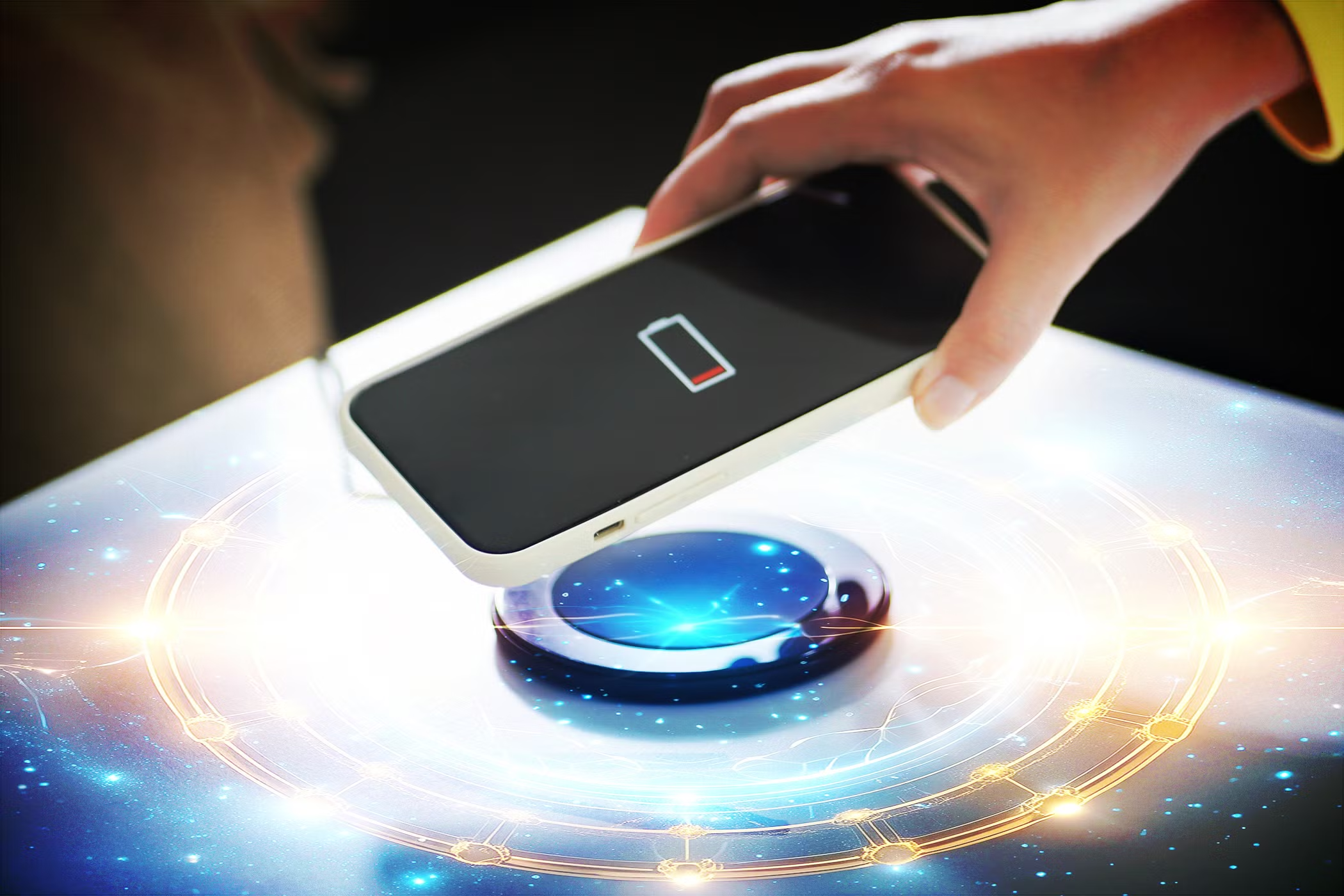

The dream of cutting the final cord has driven electrical engineering for well over a century. Today, placing a smartphone on a nightstand, dropping a pair of earbuds into a cradle, or parking an electric car over a garage pad requires nothing more than proximity. What feels like effortless modern convenience is actually the culmination of fundamental electromagnetic physics, fierce corporate standard battles, and continuous material science breakthroughs.
Wireless power transfer has transformed from an experimental curiosity into an essential pillar of consumer electronics, medical engineering, and industrial automation. Understanding how this technology reached its current maturity requires examining its theoretical roots, its bumpy consumer rollout, and the innovations expanding its reach today.
The Early Foundations of Wireless Power
The scientific principles underpinning wireless power date back to the nineteenth century. Michael Faraday discovered electromagnetic induction in 1831, demonstrating that a changing magnetic field inside a loop of wire generates an electric current. Decades later, eccentric inventor Nikola Tesla sought to harness this phenomenon on a grand scale.
Tesla envisioned a world powered entirely through the atmosphere without physical cables. His Wardenclyffe Tower project in Shoreham, New York, aimed to transmit electrical energy across long distances using the Earth and upper atmosphere as conductors. While Tesla’s ambitious dream collapsed due to funding shortages and physical limitations related to energy dissipation, his core work on tuned resonant circuits laid the groundwork for near-field wireless power systems used today.
For most of the twentieth century, wireless charging remained confined to niche applications. The most recognizable early consumer implementation arrived in the early 1990s with inductive electric toothbrushes. Because toothbrushes operate in wet bathroom environments, exposed metal contacts posed corrosion and shock hazards. Manufacturers sealed primary induction coils inside the plastic dock and secondary coils inside the waterproof handle, establishing a safe, reliable, and completely enclosed power transfer method.
The Standards War and the Rise of Qi
As personal mobile devices exploded in popularity throughout the 2000s, messy cables and fragile charging ports became universal consumer headaches. Pioneer companies began experimenting with commercial wireless charging pads. The Palm Pre, released in 2009, made waves with its magnetic Touchstone charging dock, introducing many users to the luxury of cable-free charging for the first time.
However, widespread adoption stalled because early implementations were proprietary and fragmented. A customer with one brand of phone could not use a charging mat made by another. This fragmentation triggered a standards war between three major industry alliances:
-
The Wireless Power Consortium (WPC): Formed in 2008, the WPC created the Qi standard based on tightly coupled magnetic induction operating at low frequencies.
-
The Power Matters Alliance (PMA): Backed by major retail and telecom players, PMA used a similar inductive technology but operated at slightly different frequencies.
-
The Alliance for Wireless Power (A4WP): Championed under the brand name Rezence, this group promoted loosely coupled magnetic resonance, which promised greater spatial freedom and multi-device charging from a single pad.
The market turned decisively in favor of the WPC. The turning point came when mobile industry leaders integrated Qi receivers directly into flagship phones without requiring bulky add-on cases. When major coffee chains, automotive manufacturers, and airport lounges installed Qi pads in public furniture, the network effect took hold. By the late 2010s, rival standards had either merged with the WPC or shifted their focus, establishing Qi as the universal global benchmark.
How Inductive and Resonant Power Transfer Work
Modern wireless charging relies on distinct physical mechanisms depending on distance, alignment, and power requirements.
Magnetic Induction
The vast majority of consumer wireless chargers utilize magnetic induction. A transmitter base contains a coiled copper wire connected to an alternating power source. When electricity flows through this coil, it generates an oscillating magnetic field perpendicular to the surface.
When a compatible receiver coil inside a phone or accessory enters this field, the alternating magnetic flux induces an alternating electrical current in the receiver coil. Onboard circuitry converts this alternating current into direct current, regulating the voltage to replenish the lithium-ion battery safely. Magnetic induction delivers high electrical efficiency, often between 70% and 80%, but requires precise alignment and direct contact within a few millimeters.
Magnetic Resonance
To solve the strict alignment requirements of pure induction, engineers developed magnetic resonance charging. In resonant systems, both the transmitter and receiver coils are tuned to oscillate at the exact same natural magnetic frequency.
This shared resonance allows energy to tunnel efficiently across larger air gaps and through non-conductive barriers like thick tabletops or vehicle chassis. It also permits a single large transmitter coil to power multiple smaller receiver coils simultaneously, regardless of their orientation on the surface.
Radio Frequency and Power Beaming
True long-range wireless charging moves away from magnetic fields to focus on focused radio frequency (RF), infrared, or ultrasound waves. In these architectures, a central base station detects smart devices in a room and beams focused electromagnetic waves directly toward small receiver antennas. Onboard rectifier circuits convert the ambient RF energy into trickle-charge current. While power levels remain low, this approach is ideal for internet-of-things sensors, smart locks, and wearable sensors that consume minimal continuous power.
Magnetic Alignment and the Arrival of Qi2
Despite the success of the original Qi standard, early wireless charging suffered from one persistent user flaw: imperfect coil alignment. If a user placed their smartphone slightly off-center on a charging pad, power transfer efficiency plummeted, charging times doubled, and excess energy converted directly into heat.
Apple addressed this problem in 2020 by embedding a ring of rare-earth magnets around the interior charging coil of its smartphones, a system named MagSafe. The magnets automatically snap the device into the exact mechanical center of the charging pad, ensuring optimal coil-to-coil alignment every time.
Recognizing the elegance of this solution, the Wireless Power Consortium collaborated to integrate magnetic positioning directly into the open standard. This resulted in the Qi2 specification and its Magnetic Power Profile. Qi2 brings magnetic alignment, improved 15-watt and higher charging rates, smarter thermal management, and strict device-authentication protocols across both Android and iOS ecosystems.
Beyond Smartphones: Industrial, Medical, and Automotive Scaling
Wireless power transfer is no longer limited to five-watt or fifteen-watt handheld gadgets. High-power systems are transforming heavy industries:
-
Electric Vehicles (EVs): High-power inductive pads installed on garage floors or in commercial parking stalls charge electric vehicles at rates ranging from 11 kilowatts to over 50 kilowatts. Drivers simply park over the ground assembly without handling heavy, frozen, or wet high-voltage charging cables.
-
Medical Implants: Transcutaneous energy transfer systems charge implanted ventricular assist devices, pacemakers, and neurostimulators straight through intact skin. Eliminating percutaneous wires dramatically cuts infection risks for patients.
-
Industrial Automation: Automated guided vehicles and warehouse robots charge autonomously between tasks by parking over recessed inductive floor plates, eliminating downtime and mechanical contact wear.
-
Cordless Kitchen Appliances: Standards such as the Ki Cordless Kitchen deliver up to 2.2 kilowatts of resonant power through kitchen countertops, letting blenders, kettles, and rice cookers operate without power cords.
Frequently Asked Questions
Does wireless charging degrade a smartphone battery faster than cable charging?
Wireless charging does not inherently damage lithium-ion battery chemistry, but the extra heat it generates can accelerate degradation if unmanaged. Because energy transfer through magnetic fields creates thermal buildup in both the charger and the phone, sustained high temperatures can shorten overall battery lifespan. Modern chargers and smartphones mitigate this by using active cooling fans, thermal throttling, and magnetic alignment to keep operating temperatures within safe limits.
Can wireless charging pads interfere with implanted medical devices?
Consumer inductive chargers emit low-frequency magnetic fields that drop off sharply within a few inches. However, the strong static magnets built into modern magnetic charging pads and accessories can trigger magnetic switches inside pacemakers or implantable cardioverter-defibrillators if held in immediate contact with the chest. Medical guidelines recommend keeping magnetic accessories at least six inches away from implanted cardiac devices.
How does reverse wireless charging work?
Reverse wireless charging repurposes the internal receiver coil and power management chip inside a smartphone to act as an alternating magnetic field transmitter. When activated in the operating system, the phone draws power from its own battery, converts it into an oscillating current, and projects an electromagnetic field through its rear glass to charge smaller accessories like earbuds or smartwatches.
Do phone cases made of metal, carbon fiber, or thick rubber block charging?
Materials affect wireless charging based on their electrical conductivity and thickness. Non-conductive materials like silicone, leather, wood, and thin plastic allow magnetic fields to pass freely, though cases thicker than three to five millimeters can reduce power efficiency. Cases containing solid aluminum, steel plates, magnetic kickstands, or genuine carbon fiber will absorb the magnetic field, generate dangerous eddy currents, and prevent the battery from charging.
What is foreign object detection and why is it necessary?
Foreign Object Detection is a mandatory safety feature built into certified wireless chargers. If a metallic item like a coin, paperclip, or aluminum foil sits between the transmitter and the device, the alternating magnetic field will induce parasitic electrical currents in the metal, causing it to reach scalding temperatures within seconds. Foreign Object Detection monitors changes in resonance and instantly cuts power if an unauthorized metallic object is detected.
Can a wireless charging pad transmit data simultaneously with power?
Standard Qi pads send small amounts of low-speed operational data back and forth to negotiate wattage, monitor temperature, and check battery levels. However, standard wireless charging coils are not designed for high-speed user data transfers like video streaming or large file transfers. Separate wireless protocols like Wi-Fi, Bluetooth, or Ultra-Wideband handle data communications while the inductive coil handles power transfer.
How do snow, ice, and road grime affect outdoor electric vehicle wireless charging?
Outdoor EV wireless charging pads use low-frequency magnetic fields that easily penetrate non-magnetic substances such as water, mud, compacted snow, asphalt, and ice without noticeable power loss. Most automotive-grade transmitter units also feature integrated low-power heaters to melt accumulated ice and automated Foreign Object Detection sensors to ensure stray metal debris does not overheat beneath the vehicle chassis.

Comments are closed.